






Key Points
- Nikkei 225 declined sharply as semiconductor and technology stocks faced renewed selling pressure.
- Japanese chip-related shares fell after weakness in US technology stocks raised concerns over AI infrastructure spending and semiconductor demand.
- Advantest, Tokyo Electron and other semiconductor names led losses across the index.
- Investors are monitoring global AI spending trends, semiconductor demand and broader technology sector sentiment, while assessing the impact of monetary policy expectations on market valuations.
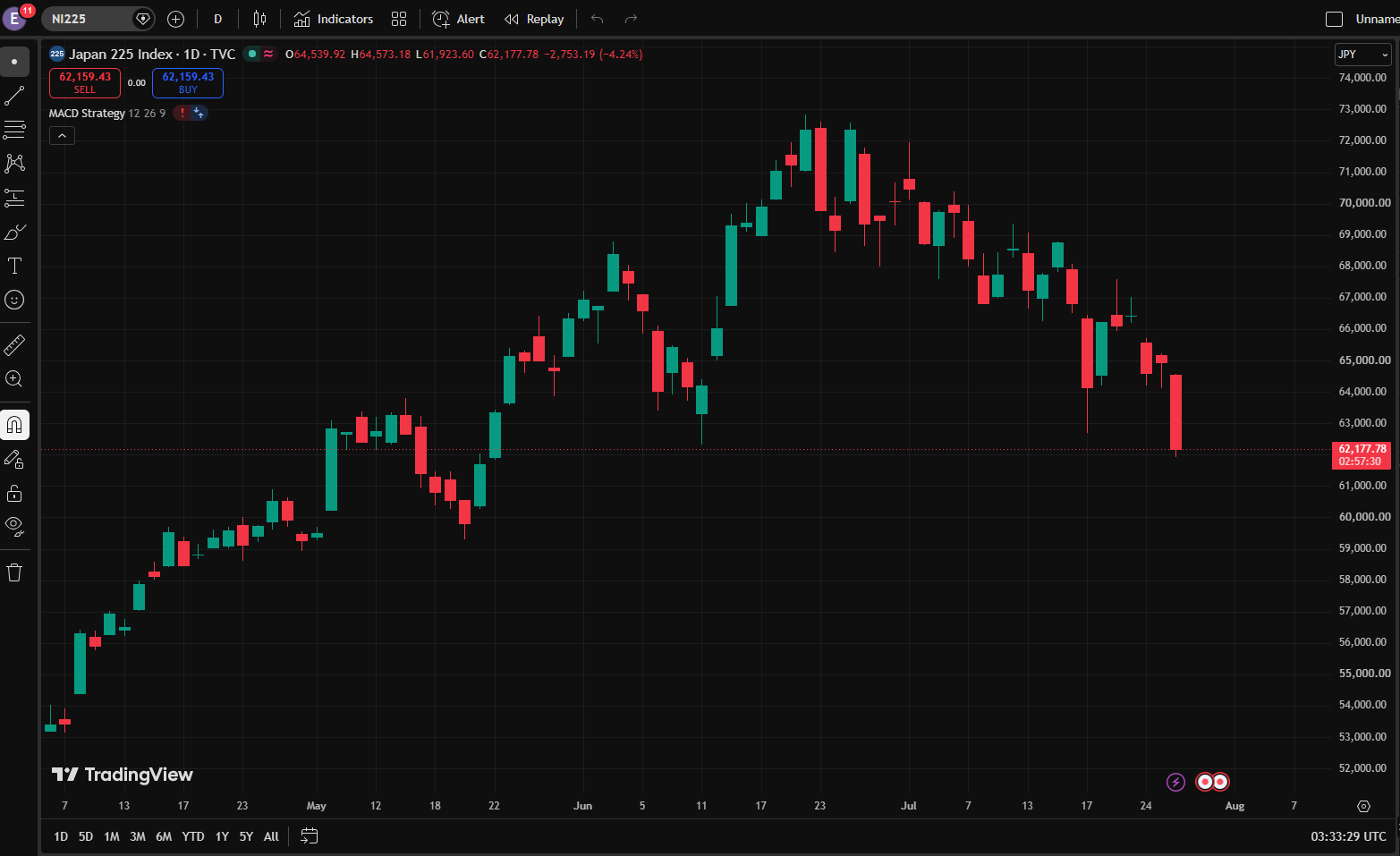
- Nikkei 225 is testing the 62,000 area after retreating from recent highs.
The Nikkei 225 Index declined on Tuesday as renewed selling pressure in technology and semiconductor stocks weighed on Japanese equities.
The index fell back towards the 62,000 area, extending its recent decline and reaching its lowest level in around two months. The move followed weakness in US chipmakers overnight, as investors reassessed the sustainability of AI investment growth and the outlook for semiconductor demand.
The decline spread across Asian technology shares as concerns grew that heavy AI-related investment spending may face greater scrutiny from investors.
Why Traders Are Watching This
The latest decline highlights the close connection between Japanese equities and the global technology cycle.
Japan’s semiconductor sector has benefited from strong demand for advanced chips, artificial intelligence infrastructure and data centre investment. However, concerns that major technology companies may reassess the pace of AI-related capital spending have increased pressure on chip-related stocks.
The selloff affected major technology-related companies, including Advantest and Tokyo Electron, while SoftBank Group also declined as investors reduced exposure to AI-linked assets.
Markets are now assessing whether the current weakness represents a short-term correction after strong gains or a broader reassessment of AI-related valuations.
Key Trading Levels
| Price Level | What Traders Are Watching |
| 65,000 | Key resistance after the recent decline. A move back above this level could improve short-term sentiment. |
| 63,000 | Immediate recovery level. A break above this area may signal buyers are regaining control. |
| 62,000 | Current support area and psychological level. Holding above this zone may help stabilise the index. |
| 60,000 | Next downside support if selling pressure continues. |
| 58,000 | Wider support zone from the previous consolidation area. |
The Nikkei 225 is currently testing the 62,000 area after retreating from recent highs.
A move above 63,000 could improve short-term momentum and bring the 65,000 resistance level into focus.
On the downside, a break below 62,000 could increase selling pressure towards 60,000, while further weakness may expose the 58,000 support zone.
Bullish and Bearish Scenarios
| Setup | Trigger | Potential Market Reaction |
| Recovery Attempt | Hold above 62,000 support | Nikkei 225 may attempt to stabilise and recover towards the 63,000 resistance level. |
| Bullish Continuation | Break and hold above 63,000 | Improving momentum could push the index towards the 65,000 resistance area. |
| Stronger Recovery | Move above 65,000 | A sustained rebound may signal renewed confidence in Japanese equities and technology stocks. |
| Range Consolidation | Remain between 62,000 and 63,000 | The index may continue moving sideways as investors assess AI spending trends and semiconductor demand. |
| Bearish Breakdown | Fall below 62,000 | Selling pressure may increase, bringing the 60,000 support level into focus. |
| Deeper Decline | Break below 60,000 | Further weakness could expose the 58,000 support zone. |
The Nikkei 225 remains under pressure as investors reassess AI-related valuations, semiconductor demand and broader risk sentiment.
The bullish scenario would require buyers to defend the 62,000 support area and push the index back above 63,000. A sustained recovery could bring the 65,000 resistance level back into focus.
The bearish scenario strengthens if the Nikkei 225 breaks below 62,000. A continued decline could increase selling pressure towards 60,000 and potentially expose the 58,000 support area.
Disclaimer
The price levels and market scenarios above reflect the author’s view at the time of writing and do not represent financial advice or an official recommendation from VT Markets. Traders should conduct their own analysis and manage risk carefully.
Trade Nikkei 225 CFDs With VT Markets
The Nikkei 225 remains closely watched as investors assess developments across technology stocks, semiconductor demand and global monetary policy expectations.
With VT Markets, traders can access Nikkei 225 CFDs alongside other indices, forex pairs, gold, oil, shares, ETFs and global CFD markets from one platform.
This allows traders to monitor Japanese equity movements while comparing developments across global markets, technology sectors and broader risk sentiment.
Use VT Markets’ charting tools to track support, resistance and price trends as the next Nikkei 225 setup develops.
Start trading indices with VT Markets today.
Why Trade Nikkei 225 as a CFD?
Nikkei 225 CFDs allow traders to take a view on Japanese equity index movements without directly owning the underlying shares.
This flexibility can be useful when markets react quickly to earnings reports, technology trends, economic data and changes in global risk sentiment.
If the Nikkei 225 breaks higher, traders can monitor potential bullish continuation. If selling pressure increases, traders can assess possible downside scenarios.
With VT Markets, traders can follow Nikkei 225 price movements in real time and compare them with other major CFD markets through one account.
What to Watch Next
The global technology sector remains the main near-term focus for Japanese equity markets.
Further weakness in semiconductor stocks or concerns over AI investment returns could continue weighing on the Nikkei 225. However, stabilisation in US technology shares and renewed confidence in the semiconductor cycle could help improve sentiment across Japanese equities.
Traders will also monitor:
- Federal Reserve policy signals and interest-rate expectations
- US technology earnings and AI investment trends
- Semiconductor demand outlook
- Japanese corporate earnings updates
- Movements in the Japanese yen and global risk sentiment
From a technical perspective, 63,000 is the immediate resistance level to watch. A sustained move above this area could bring 65,000 into focus, while a break below 62,000 may expose 60,000 and 58,000.
Frequently Asked Questions
Why did the Nikkei 225 fall?
The Nikkei 225 declined as semiconductor and technology stocks came under pressure following weakness in US chipmakers and concerns over AI investment spending.
Why are Japanese semiconductor stocks under pressure?
Japanese semiconductor companies are sensitive to global technology trends. Concerns that major technology firms may slow AI-related capital spending have increased pressure on chip-related shares.
How does AI investment affect the Nikkei 225?
AI investment has supported demand for advanced semiconductors and related technology companies. However, concerns over spending levels and future returns can also create volatility in AI-linked stocks.
What are the key Nikkei 225 levels to watch?
The 62,000 area is the immediate support level, followed by 60,000 and 58,000. Resistance levels to monitor are 63,000 and 65,000.
What could support Japanese stocks?
A recovery in technology shares, stronger semiconductor demand, improved risk sentiment and supportive monetary policy expectations could help Japanese equities recover.
What could pressure the Nikkei 225 further?
Further weakness in global technology stocks, concerns over AI spending, weaker semiconductor demand, higher interest-rate expectations or a stronger yen could weigh on Japanese equities.
Start trading now — click here to create your real VT Markets account.








