







Key Takeaways
- While you can make money trading gold, it requires deep market knowledge, strict discipline, and realistic expectations rather than searching for quick wealth.
- Gold has delivered positive annual returns in roughly 63% of the years since the 1970s, including an impressive bull run through 2025 and into early 2026.
- Gold prices are heavily influenced by shifts in interest rates, rising inflation, geopolitical tensions, and central bank buying habits.
- Successful traders survive the market by avoiding excessive leverage, controlling emotional trading, and risking only a small portion of capital per trade.
- Profitable gold trading relies on structured approaches like technical analysis, trend-following strategies, and chart pattern identification.
Why Gold Attracts Traders
Gold has been valued for thousands of years and is often seen as a safe-haven asset during times of economic uncertainty. Unlike paper currencies, gold is a limited resource, which helps it retain value over the long term. Today, traders can easily access gold through CFDs, futures, ETFs, and spot markets, making it one of the most popular financial instruments worldwide. While many people are attracted by its profit potential, success in gold trading requires knowledge, discipline, and proper risk management.
Gold’s Historical Performance
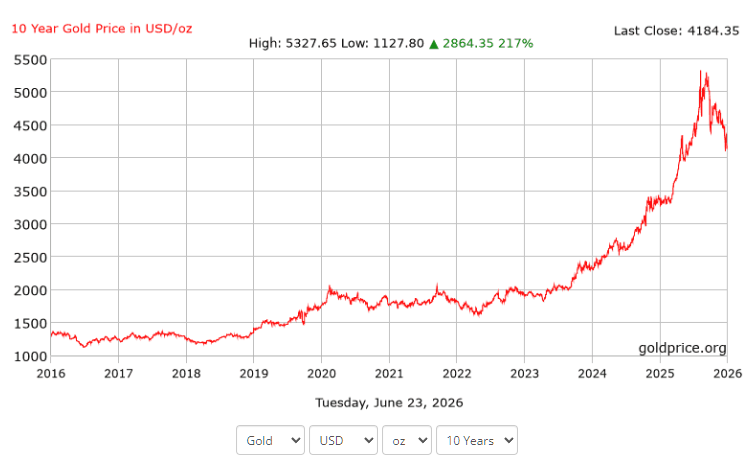
Gold has a strong track record of delivering returns over time. Since the 1970s, it has produced positive annual returns in roughly 63% of the years. Some periods have generated exceptional gains, while others have seen significant declines.
The most recent bull run was particularly impressive. Gold surged throughout 2025, recording multiple all-time highs, and continued rising into early 2026, reaching above $5,600 per ounce before experiencing a correction. These movements highlight both the opportunities and risks associated with trading gold. While strong trends can create profit opportunities, volatility can also lead to losses if trades are not managed properly.
How Gold Trading Works
Most traders do not buy physical gold. Instead, they trade financial products that track gold prices. Popular instruments include spot gold, CFDs, futures contracts, and ETFs. If you want a step-by-step breakdown of how to get started with these financial instruments, you can explore this practical guide on how to trade in gold.
One of gold’s biggest advantages is liquidity. As one of the most actively traded assets in the world, traders can usually enter and exit positions quickly. However, gold prices are influenced by many factors, including interest rates, inflation, central bank activity, and geopolitical events. Understanding these drivers is essential for anyone looking to trade gold successfully. Understanding these drivers and how they impact the XAU/USD currency pair is essential for anyone looking to trade gold successfully.
Can You Really Make Money Trading Gold?
The simple answer is yes. Many traders profit from gold, but success is rarely as easy as social media advertisements suggest.
Gold often experiences strong trends during periods of economic uncertainty, creating opportunities for traders. However, the same volatility that creates profits can also generate losses. Many beginners focus solely on potential gains and ignore risk, often using excessive leverage that magnifies losses.
Successful traders understand that long-term profitability comes from consistency rather than trying to predict every market move. Managing risk, protecting capital, and maintaining discipline are far more important than achieving a high win rate.
What Moves Gold Prices?
Several key factors influence gold prices:
- Interest Rates: Lower rates generally support gold prices, while higher rates can reduce demand.
- Inflation: Gold is often used as a hedge against rising prices and declining purchasing power.
- Geopolitical Events: Political tensions, conflicts, and economic uncertainty often increase demand for gold.
- Central Bank Buying: Strong demand from central banks has supported gold’s long-term growth in recent years.
Understanding these factors can help traders better anticipate potential market movements.
Common Mistakes Gold Traders Make
Many traders lose money because of avoidable mistakes. Excessive leverage is one of the biggest risks, as even small price movements can result in significant losses and trigger a sudden margin call.
Emotional trading is another common problem. Fear and greed often lead traders to buy after prices have already risen sharply or sell during periods of panic. To protect traders from catastrophic losses during volatile swings, reputable platforms offer negative balance protection, though poor preparation and a lack of risk management can still severely damage trading performance.
Professional traders typically risk only a small portion of their capital on each trade and focus on preserving their accounts during losing streaks.
Strategies Used by Successful Gold Traders
Profitable gold traders rely on structured approaches rather than luck. Trend-following strategies are among the most popular, as they allow traders to align themselves with the dominant market direction.
Technical analysis also plays a significant role. Traders often use support and resistance levels, moving averages, trend lines, and momentum indicators to identify potential entry and exit points. While no method guarantees success, analysing historically reliable setups—such as these 7 chart patterns for gold trading—can help improve your live decision-making.
Risk management is equally important. Experienced traders rely on core trade risk management tips, such as utilising stop-loss orders, proper position sizing techniques, and disciplined trade management to protect their capital.
Successful traders continuously review their performance, learn from mistakes, and adapt to changing market conditions. Gold markets evolve, and traders must evolve with them.
Is Gold Trading Right for Beginners?
Gold trading can be suitable for beginners when approached with realistic expectations. Many newcomers enter the market expecting quick profits, only to become discouraged when they encounter losses. A more practical approach is to treat trading as a skill that requires education, practice, and experience, starting with a complete beginner’s guide to gold trading.
A more practical approach is to treat trading as a skill that requires education, practice, and experience. Beginners should focus on understanding market fundamentals, learning risk management principles, and developing a structured trading plan. Starting with smaller position sizes can help build confidence while reducing emotional pressure, which is exactly why gold traders choose cent accounts when they are first starting out.
Gold offers several advantages for new traders, including high liquidity, extensive market coverage, and strong historical trends. However, its volatility means that discipline and proper risk management remain essential. For those willing to invest the necessary time and effort, exploring the right trading accounts to get you started can make gold trading a valuable part of a broader financial strategy.
Conclusion
Gold can be a profitable trading instrument, but it is not a shortcut to quick wealth. Historical performance shows that gold has delivered strong returns and remains one of the world’s most important financial assets.
The traders who succeed are usually those who understand market fundamentals, manage risk carefully, and remain disciplined during both winning and losing periods. For beginners willing to invest time in learning and developing a structured approach, gold trading can offer valuable opportunities in a wide range of market conditions.
The Big Questions
1) Can you actually make money trading gold?
Yes, it is entirely possible to profit from gold trading, but it is rarely as quick or easy as social media advertisements suggest. Consistent profitability relies on market knowledge, strict risk management, and discipline rather than luck or predicting every market swing.
2) Do I need to buy physical gold bars to trade them?
No, most modern traders do not buy physical gold. Instead, they trade financial derivative products that track live spot gold prices, such as Contracts for Difference (CFDs), futures contracts, and Exchange-Traded Funds (ETFs).
3) Why do so many beginners lose money trading gold?
The most common mistakes include using excessive leverage (which heavily magnifies small price movements into massive losses), letting fear and greed drive emotional trades, and neglecting essential risk management setups.
4) Is gold trading a safe option for beginners?
Gold can be highly suitable for beginners due to its excellent liquidity and clear historical trends, provided it is approached as a skill that takes time to learn. New traders should manage expectations, start with smaller position sizes (or utilise mini/cent accounts), and always deploy stop-loss orders to safeguard their capital.
5) What moves the price of gold?
Gold prices are primarily driven by four key macroeconomic factors:
Interest Rates: Lower rates generally support gold prices, while higher rates can reduce demand.
Inflation: Investors frequently use gold as a reliable hedge against rising prices and a decline in fiat purchasing power.
Geopolitical Events: Political tensions, global conflicts, and broader economic uncertainty naturally increase safe-haven demand for gold.
Central Bank Buying: Aggressive purchasing and accumulation of reserves by central banks have strongly supported gold’s long-term growth trends.










