







Key Points
- WTI rose 0.51% to $62.58, Brent gained 0.53% to $66.37
- OPEC+ to increase output by just 137,000 bpd in October, down sharply from prior months
- Sanction speculation on Russia fuels supply concerns after Kyiv attack
- Fed rate cut expectations at 89.4% also buoy oil outlook
Oil prices edged higher on Tuesday, with West Texas Intermediate (WTI) at $62.58 and Brent crude at $66.37, following a weaker-than-expected OPEC+ production boost. The alliance’s decision to raise output by just 137,000 bpd for October compared to 555,000 bpd in September. The dip signalled a more cautious approach amid ongoing supply-demand volatility.
Analysts had expected a more aggressive ramp-up, but the restrained move reflects faltering demand growth, recent oversupply trends, and the need to manage price stability.
Russia Sanctions in Focus
Supply-side support was further reinforced as Russia launched its largest air attack on Ukraine in months, prompting renewed threats of sanctions from the West.
President Trump signalled readiness to escalate restrictions, while EU officials met with U.S. counterparts to explore coordinated energy sanctions. It’s a move that could squeeze global oil supply and underpin prices.
Technical Analysis
Crude oil (CL-OIL) is trading at $62.64, up +0.34%, but the broader chart still reflects a weak structure. After peaking near $77.90 in July, prices have steadily slipped, testing the $62–63 zone, which now acts as immediate support.
The moving averages (5,10,30) remain in a bearish alignment, with price struggling to sustain above the shorter-term averages.
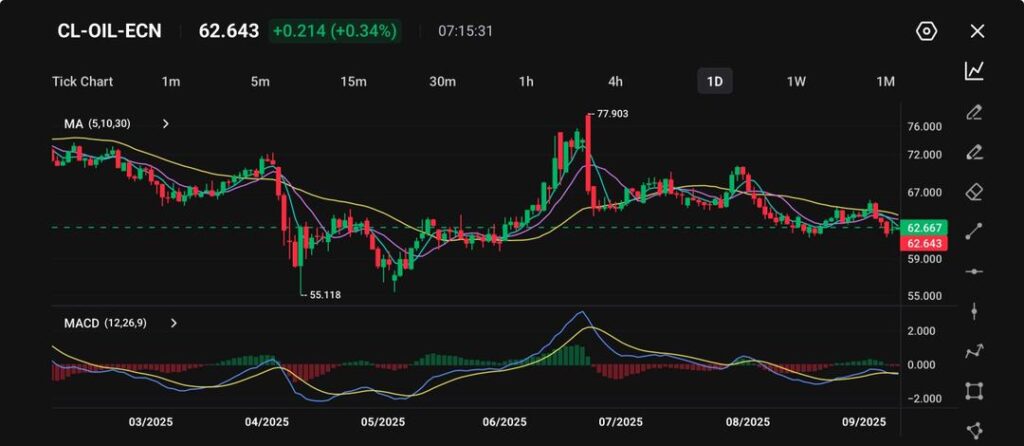
The MACD is flat but still below the zero line, signalling that momentum remains tilted to the downside. Any recovery attempts have been capped under $67, showing persistent selling pressure.
If prices fail to hold the $62 level, oil could retest $60–59, last seen in early Q2. On the upside, a break back above $67 would be needed to restore short-term bullish momentum.
Broader fundamentals, such as OPEC+ output discipline and US inventory trends, remain key drivers for the next move.
Cautious Forecast
The market remains vulnerable to both supply disruptions and rate decisions. A confirmed Fed rate cut next week could boost demand expectations, while further sanctions on Russia would squeeze global flows.
However, with demand still lagging forecasts and oversupply a persistent theme, rallies may remain capped unless global risks escalate sharply.










